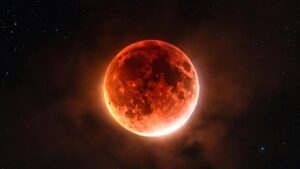
Mark your calendars, America; on the night of March 2 into the early morning hours of March 3, 2026, the full Worm Moon will undergo a total lunar eclipse, turning the entire Moon a deep, glowing blood-red for a full hour of totality in one of the most viewer-friendly lunar eclipses of the decade.
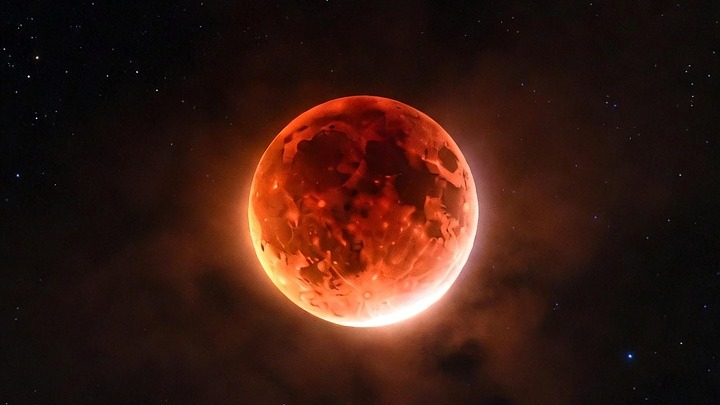
This breathtaking “Blood Moon” occurs when Earth passes directly between the Sun and the full Moon, casting its dark umbral shadow across the lunar disk. Instead of disappearing, the Moon transforms into a striking reddish-orange hue because sunlight filters through Earth’s atmosphere: shorter blue wavelengths scatter away, while longer red wavelengths bend around the planet’s curve and illuminate the Moon in the combined glow of every sunrise and sunset happening simultaneously on Earth. The color can range from bright copper to deep brick-red, depending on atmospheric conditions such as dust, smoke, or volcanic particles. Totality; the phase when the Moon is fully immersed; lasts a generous 58 minutes (11:04–12:02 UTC, or roughly 3:04–4:02 a.m. Pacific Time / 6:04–7:02 a.m. Eastern Time), giving plenty of time to watch the slow, mesmerizing shift from partial shading to complete red immersion and back.
For viewers across the United States, this eclipse is especially accessible in the western half of the country, where totality occurs during the pre-dawn hours when the Moon is still high in the sky. Eastern states may catch only partial phases before moonset, while the central and western regions enjoy prime viewing. The Moon will lie near the bright star Regulus in Leo, adding a golden spark to the red glow and creating a particularly dramatic scene against the starry backdrop.
Key Viewing Details for U.S. Audiences
- Western U.S. (Pacific Time Zone): Totality 3:04–4:02 a.m. PT; Moon high overhead before sunrise. Excellent for dark-sky sites in California, Oregon, Washington, Nevada, Arizona, Utah, Colorado, and Idaho.
- Mountain Time Zone: Totality ~4:04–5:02 a.m. MT; Prime pre-dawn viewing in New Mexico, Wyoming, Montana, and the Rockies.
- Central Time Zone: Totality ~5:04–6:02 a.m. CT; Moon still visible during early morning hours in Texas, Oklahoma, Kansas, Nebraska, and the Midwest.
- Eastern Time Zone: Partial phases only before moonset; totality occurs after moonset for most locations east of the Mississippi.
- Alaska & Hawaii: Full coverage during evening or night hours; Alaska sees it late evening, Hawaii during the night.
No special equipment is required: the Blood Moon is perfectly safe and stunning with the naked eye. Binoculars or a small telescope enhance crater details under the red light and reveal subtle brightness variations across the disk.
Timeline (in UTC, with U.S. Time Zone Conversions)
- Western U.S. (Pacific Time Zone): Totality 3:04–4:02 a.m. PT; Moon high overhead before sunrise. Excellent for dark-sky sites in California, Oregon, Washington, Nevada, Arizona, Utah, Colorado, and Idaho.
- Mountain Time Zone: Totality ~4:04–5:02 a.m. MT; Prime pre-dawn viewing in New Mexico, Wyoming, Montana, and the Rockies.
- Central Time Zone: Totality ~5:04–6:02 a.m. CT; Moon still visible during early morning hours in Texas, Oklahoma, Kansas, Nebraska, and the Midwest.
- Eastern Time Zone: Partial phases only before moonset; totality occurs after moonset for most locations east of the Mississippi.
- Alaska & Hawaii: Full coverage during evening or night hours; Alaska sees it late evening, Hawaii during the night.
No special equipment is required: the Blood Moon is perfectly safe and stunning with the naked eye. Binoculars or a small telescope enhance crater details under the red light and reveal subtle brightness variations across the disk.
Why This Blood Moon Feels So Special for Americans
Total lunar eclipses happen roughly twice per year somewhere on Earth, but this one stands out for its long totality (58 minutes is longer than average) and excellent timing for the western United States. Many Americans in California, Arizona, Colorado, and the Pacific Northwest will see the Moon high overhead during the red phase; just before dawn; making it easy to watch from backyards, parks, or dark-sky locations like national parks or rural areas.
The eclipse follows a busy 2026 eclipse year that included the February annular solar eclipse, and it’s the last total lunar eclipse with broad U.S. visibility until late 2028–2029. That rarity, combined with the generous totality duration and the Moon’s position near bright Regulus, makes March 3, 2026, a must-see event.
Culturally, “Blood Moons” have inspired awe and storytelling across generations. Tonight, it’s pure astronomical beauty; an opportunity to share a global moment with friends, family, or neighbors under the same transformed sky.
How to Watch & Share the Magic
- Find a dark spot with an unobstructed view (especially east or southeast for moonrise in some areas).
- Arrive early to watch partial phases; the slow creep of Earth’s shadow builds anticipation.
- Dress warmly; early March mornings can be chilly; bring blankets, hot cocoa, and company.
- Use binoculars or a small telescope to see lunar craters glowing under red light.
- Check weather forecasts; clear skies are essential.
- Live streams from NASA, observatories, or astronomy clubs will be available if clouds interfere.
Gather friends, family, or fellow stargazers. Set alarms, find your spot, and watch the cosmos paint the Moon red. Tag someone you want to share this unforgettable view with; whether in California watching pre-dawn or streaming from farther east.